
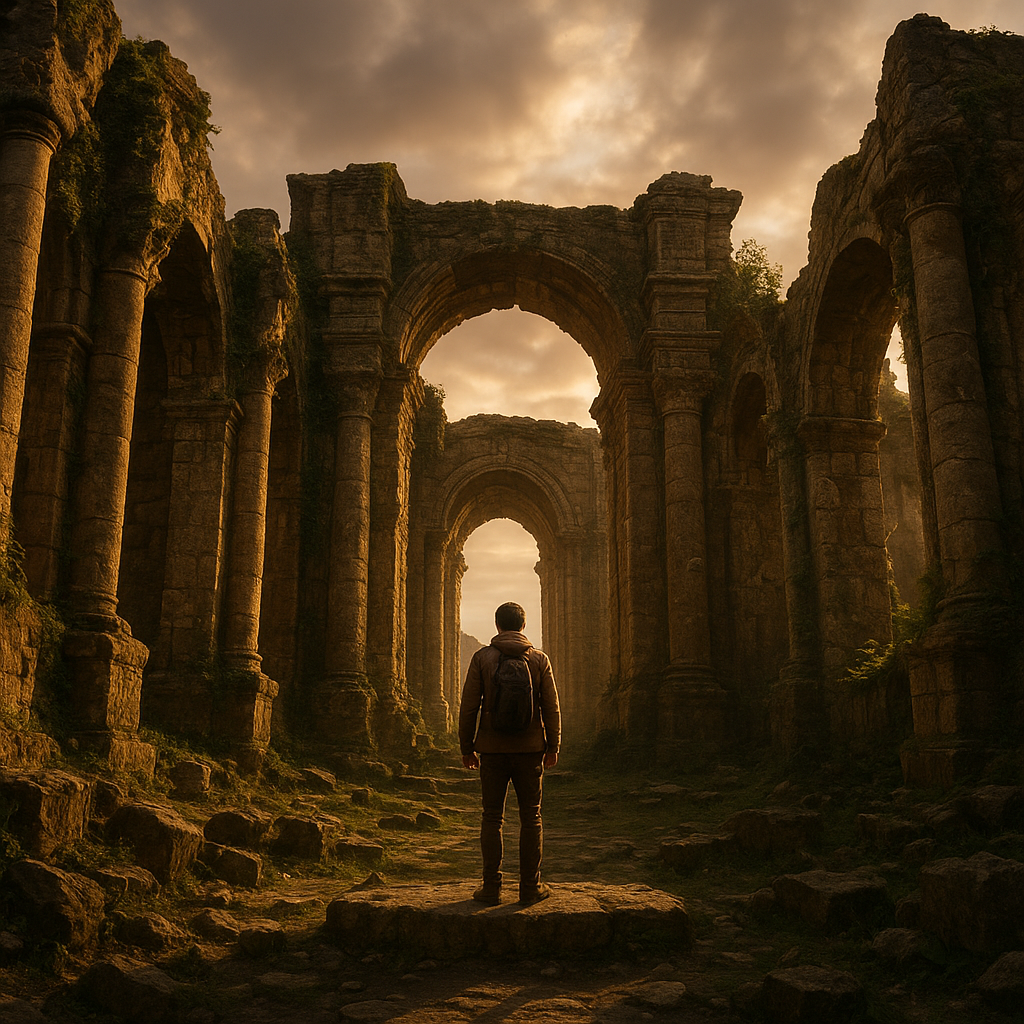

There’s a particular feeling that hits you when you’re standing in front of something truly ancient. It’s not quite awe, not quite sadness — it’s something closer to vertigo. A Roman amphitheatre, a crumbling Mayan temple half-swallowed by jungle, a Greek column still standing after 2,500 years of earthquakes and wars and tourist footfall. In those moments, the modern world — your phone, your flight home, your to-do list — dissolves completely.
Ancient ruins have drawn travellers for centuries. Long before the era of Instagram or package holidays, the Grand Tour of Europe was built around visits to classical ruins. Today, sites like Machu Picchu, Angkor Wat, and the Colosseum attract millions of visitors every year. But what is it we’re actually looking for when we seek out crumbling stones and fallen columns? And what do these places genuinely offer the modern traveller beyond a good photograph?
Why Ancient Ruins Matter — More Than You Might Think
It’s easy to dismiss ruin tourism as a box-ticking exercise — see the Parthenon, photograph the Parthenon, move on. But the appeal of ancient ruins runs far deeper than that, and understanding why helps explain why so many travellers find these experiences genuinely transformative rather than merely impressive.
Ancient ruins are, at their core, evidence that human beings have always been here. They are the physical remnants of people who loved, argued, traded, prayed, and built things they hoped would last. When you walk the streets of Pompeii and see the grooves worn into the stepping stones by Roman cart wheels, or the bakery with bread still in the oven, you’re not observing history — you’re touching it.
According to UNESCO, there are over 1,100 World Heritage Sites across the globe, a significant proportion of which are archaeological or historical ruins. Each one represents a deliberate act of collective human memory — a decision that this place is worth protecting because losing it would mean losing something irreplaceable.
What Do Ruins Symbolise?
Ruins have carried symbolic weight across every culture and era. In the Romantic period, European poets and painters were obsessed with them — not because they were depressing, but because they captured something true about the nature of time. A ruin is a building in conversation with its own disappearance. It’s simultaneously an achievement and a reminder that nothing is permanent.
For travellers today, ruins symbolise several things at once:
- Continuity — a reminder that human civilisation stretches back far further than our own brief lives
- Humility — even the greatest empires eventually fall, which puts our own era into perspective
- Curiosity — ruins are inherently incomplete, which invites us to imagine, question, and wonder
- Connection — standing where others stood thousands of years ago creates a strange, powerful sense of shared humanity
This symbolic richness is part of why ruins feature so prominently in art, literature, and film. They do emotional and philosophical work that a pristine, fully intact building cannot quite replicate.
The Historical Significance of Ancient Ruins
Beyond personal reflection, ancient ruins carry enormous historical significance. They are primary sources — physical documents of how societies were organised, what they valued, and how they interacted with each other and their environment.
Consider what we’ve learned from just a handful of major sites:
- Stonehenge (England) has reshaped our understanding of prehistoric engineering, astronomy, and ritual practice
- Çatalhöyük (Turkey), one of the world’s oldest cities, revealed that organised urban life existed as far back as 7500 BCE
- The temples of Karnak (Egypt) document thousands of years of pharaonic rule in hieroglyphic detail
- Teotihuacan (Mexico) tells us about a vast, sophisticated city that predates the Aztec Empire by centuries — and whose builders we still don’t fully understand
Each ruin is a puzzle, and archaeologists are still actively working on many of them. When you visit these places, you’re not just looking at the past — you’re standing in the middle of an ongoing investigation.
Why Are Ancient Ruins Important to Preserve?
The importance of ruins extends well beyond academic interest. These sites anchor national and cultural identities, support local economies through tourism, and provide a physical counterweight to the homogenising forces of modern life. A city with 3,000 years of visible history feels fundamentally different to one built last decade — and that difference matters to the people who live there.
Climate change, urban development, mass tourism, and looting all pose serious threats to ancient sites. The destruction of Palmyra in Syria, or the damage to Angkor Wat caused by unregulated visitor access, are stark reminders that these places are fragile. Responsible travel — sticking to marked paths, not touching stonework, supporting sites financially through admission fees — is one small but meaningful way visitors can contribute to preservation.
What Ancient Ruins Offer the Modern Traveller
So what does a visit to ancient ruins actually give you, practically speaking? Beyond the historical and philosophical dimensions, there are tangible benefits that make ruin-focused travel genuinely rewarding.
A Different Kind of Slow Travel
Ancient ruins encourage you to slow down. You can’t rush through Pompeii in twenty minutes and feel you’ve understood it. These sites reward lingering — reading the interpretation boards, sitting quietly in a space that once held thousands of people, noticing the small details that don’t show up in photographs.
This contrasts sharply with much of modern travel, which can feel pressured and performative. Ruins have a natural pace of their own, and most visitors find that pace infectious.
Context for Everything Else You See
Understanding the historical layers of a place transforms how you experience everything else in a destination. Visiting the ruins of ancient Athens makes the modern city make more sense — its streets, its politics, its sense of itself. Exploring the remains of a medieval fortification in Croatia gives the walled old towns of Dubrovnik or Split a depth they might otherwise lack.
Ruins give you a framework. They turn sightseeing into something closer to understanding.
The Emotional Impact Is Real
Research into travel psychology suggests that experiences which provoke awe — a genuine sense of vastness or grandeur that challenges our ordinary frame of reference — have measurable positive effects on wellbeing. They reduce self-focus, increase feelings of connectedness, and can shift perspective in ways that persist long after the trip is over.
Ancient ruins are consistently among the most awe-inducing environments a traveller can encounter. The sheer scale of the Great Pyramid of Giza, the jungle silence around the temples of Tikal, the geometric precision of Machu Picchu against its mountain backdrop — these are experiences that genuinely change how people think, at least for a while.
Choosing the Right Ruins for You
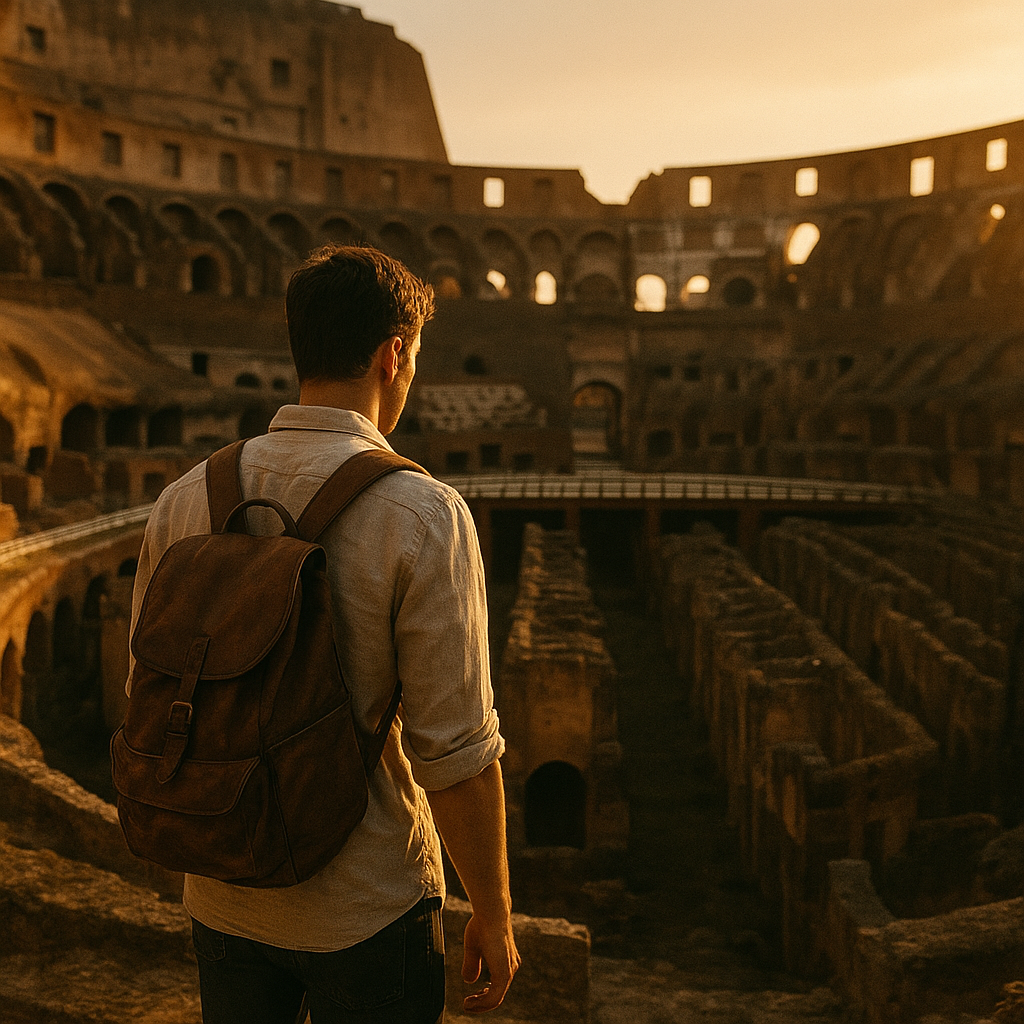
One useful piece of context for planning: the world’s ancient ruins vary enormously in atmosphere, accessibility, and the type of experience they offer. The Colosseum in Rome is extraordinary but crowds can be overwhelming; the lesser-visited ruins of Ostia Antica, just 30 minutes from Rome, offer a similarly evocative Roman experience with a fraction of the visitors.
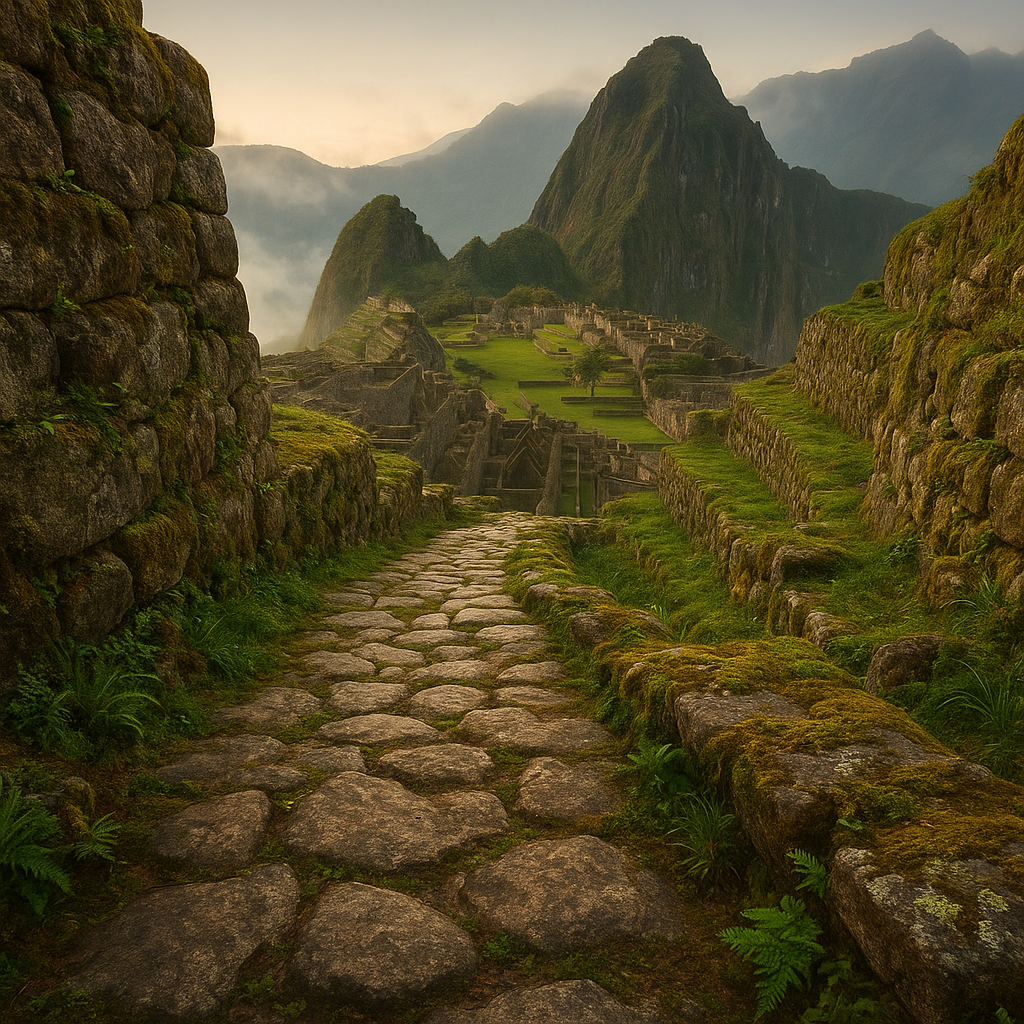
Similarly, while Machu Picchu in Peru is justifiably iconic, the nearby ruins of Choquequirao — accessible only by a multi-day trek — offer a profoundly different, quieter experience of Inca civilisation. Southeast Asia’s temple complexes range from the vast, heavily-visited Angkor Wat to remote, jungle-wrapped sites in northern Laos that see only a handful of visitors per day.
A few questions worth asking when planning a ruins-focused trip:
- What kind of experience do you want? Crowds at iconic sites versus solitude at lesser-known ones offer very different moods
- How much context do you want? Some sites have excellent on-site museums and guided tours; others require advance research to fully appreciate
- What’s the physical access like? Some ruins involve significant walking or climbing; others are largely accessible on flat ground
- What season suits the site? Many ruins are best visited in the shoulder season when the light is good and the crowds are manageable. It’s also worth thinking about practical considerations like booking tickets and transport in advance to make the most of your time on the ground
The Meaning of Ancient Ruins in a Modern World
It would be easy to argue that ancient ruins are simply relics — interesting, perhaps, but ultimately irrelevant to how we live now. But that argument doesn’t hold up well against the actual experience of visiting them.
In a world that moves extraordinarily fast, where news cycles last hours and buildings are demolished and replaced within decades, there is something genuinely valuable about spending time with something that has endured for millennia. It recalibrates your sense of time. It reminds you that the things humans have always cared about — shelter, community, meaning, beauty — haven’t changed as much as our technology has. It makes the present feel less like the only moment that matters, and more like one moment in a very long story.
That’s not an argument for nostalgia or for romanticising the past. Ancient civilisations were often brutal, hierarchical, and deeply unjust by modern standards. But their ruins don’t ask us to admire them uncritically — they ask us to think, to question, and to consider where we’ve come from and where we’re going.
In Summary
Ancient ruins are far more than scenic backdrops or items to tick off a travel list. They are physical records of human history, sites of genuine emotional and intellectual depth, and places where modern travellers consistently report some of their most meaningful experiences. For those planning extended trips to take in multiple sites, it’s also worth considering practical matters such as coverage for long-term travel before you set off.
They remind us that civilisations rise and fall, that the things we build are temporary, and that we are part of a human story far older and stranger than our daily lives suggest. Whether you’re standing in the shadow of the Parthenon, threading through the temples of Angkor, or picking your way across a windswept Roman fort on the Scottish border, the invitation is the same: slow down, look carefully, and let the age of the place do what only genuinely ancient things can do.
The ruins were there long before us. With care, they’ll be there long after we’ve gone too.