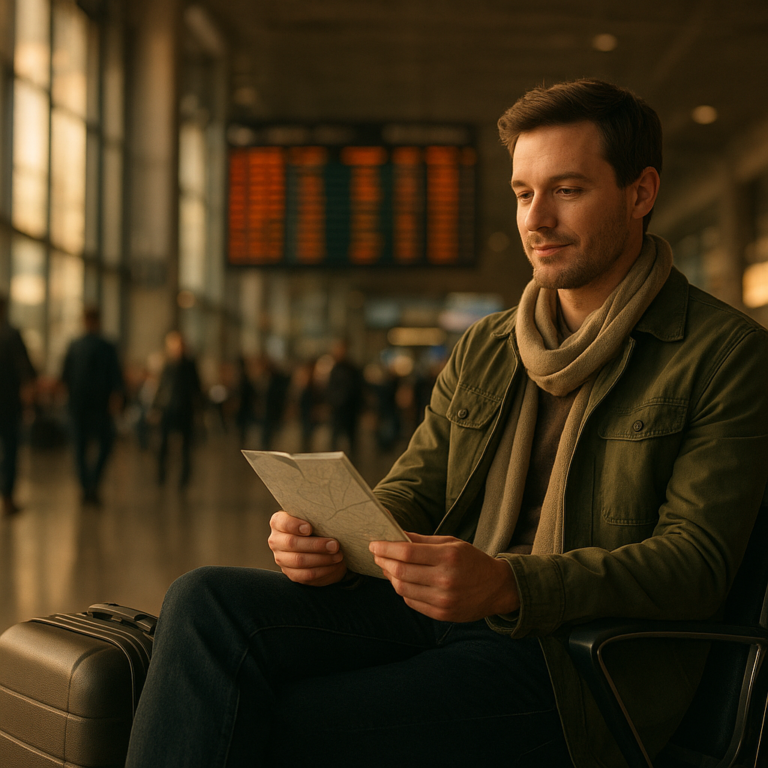
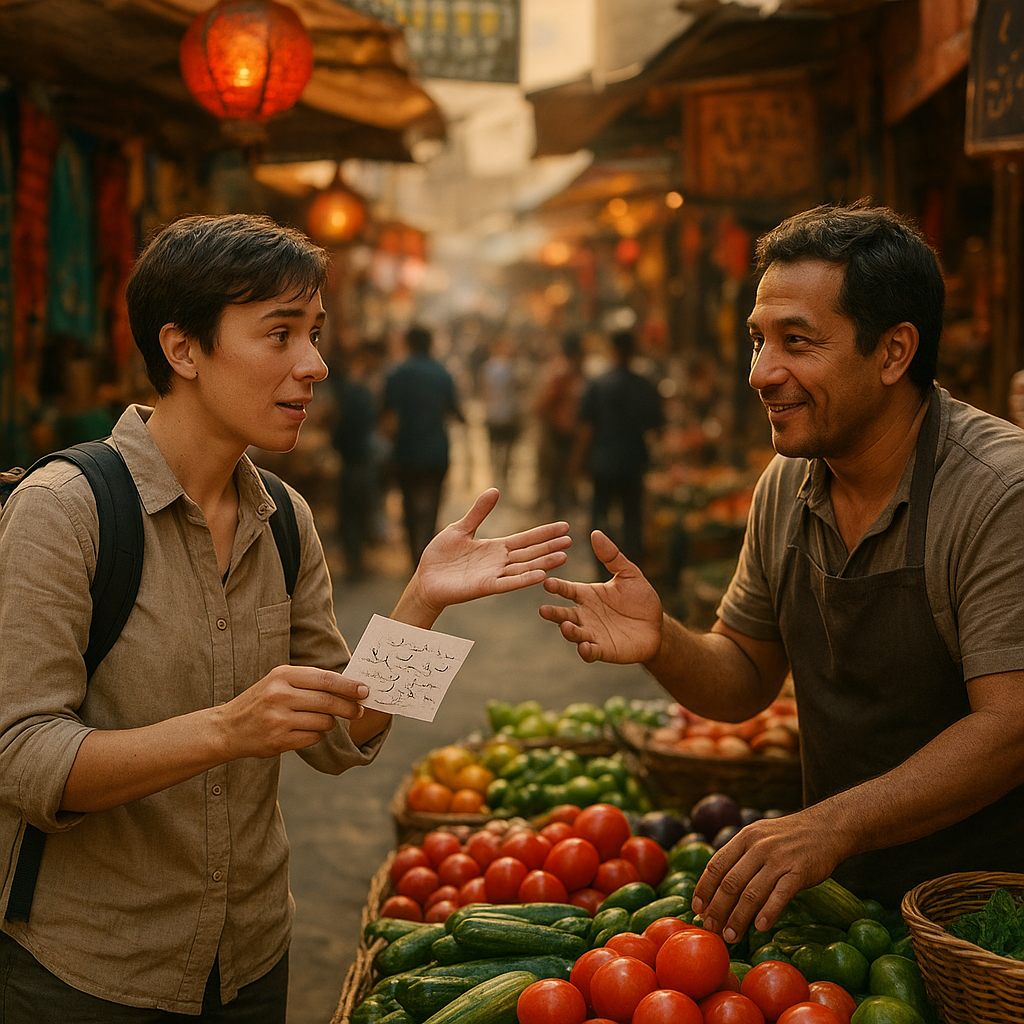

You’ve rehearsed your order three times in your head. You step up to the counter, open your mouth, and the person behind it stares back at you with polite blankness. Welcome to the language barrier — one of travel’s most humbling, occasionally hilarious, and often wildly misunderstood experiences.
Most travel advice on this topic feels almost offensively simple. “Download Google Translate!” “Learn a few phrases!” Sure. But what nobody really tells you is how emotional language barriers can be, how unpredictable they are depending on where you go, and how the strategies that work brilliantly in one country fall completely flat in another. This article gets into the honest, messier reality of navigating language abroad — and what actually helps.
The Emotional Side Nobody Prepares You For
Language barriers aren’t just logistical problems — they’re psychological ones. When you can’t communicate, even basic tasks feel enormous. Ordering food, asking for directions, or understanding a bus timetable suddenly requires enormous mental energy. Over time, this accumulates into something researchers call communicative stress, and it’s more draining than most travellers expect.
There’s also the identity shift that happens. At home, you’re articulate, capable, funny. Abroad, you’re reduced to pointing and miming. That loss of verbal identity can feel surprisingly unsettling, particularly on longer trips. Acknowledging this upfront — rather than pushing through with relentless positivity — actually helps you cope better.
On the flip side, breakthrough moments hit differently when language is a barrier. When you successfully navigate a train system in rural Japan using nothing but a phrasebook and a lot of goodwill, the satisfaction is enormous. The struggle is part of what makes travel genuinely transformative.
What Actually Makes Language Barriers Harder (or Easier)
Script and Phonetics Matter More Than Vocabulary
Most people assume the difficulty of a language barrier is about how many words you know. In reality, it’s often about the writing system and sound patterns. In countries that use a Roman alphabet — think Portugal, Poland, or the Netherlands — you can at least read signs, menus, and maps, even if you can’t speak a word. That passive literacy is enormously helpful.
In countries using Arabic script, Cyrillic, Chinese characters, or the Thai alphabet, you’re working without even that safety net. Suddenly a supermarket becomes a guessing game and a street sign is entirely unreadable. This is the language barrier most guides gloss over, and it’s worth factoring into your preparation before you travel.
Tourist Infrastructure Changes Everything
In heavily touristed areas — Bali, Paris, Barcelona, Cancún — the language barrier is often minimal because the infrastructure compensates for it. Menus have photos or English translations, staff at hotels are trained in multiple languages, and signage is frequently bilingual. Move thirty minutes off the tourist trail in any of these places, and the experience shifts dramatically.
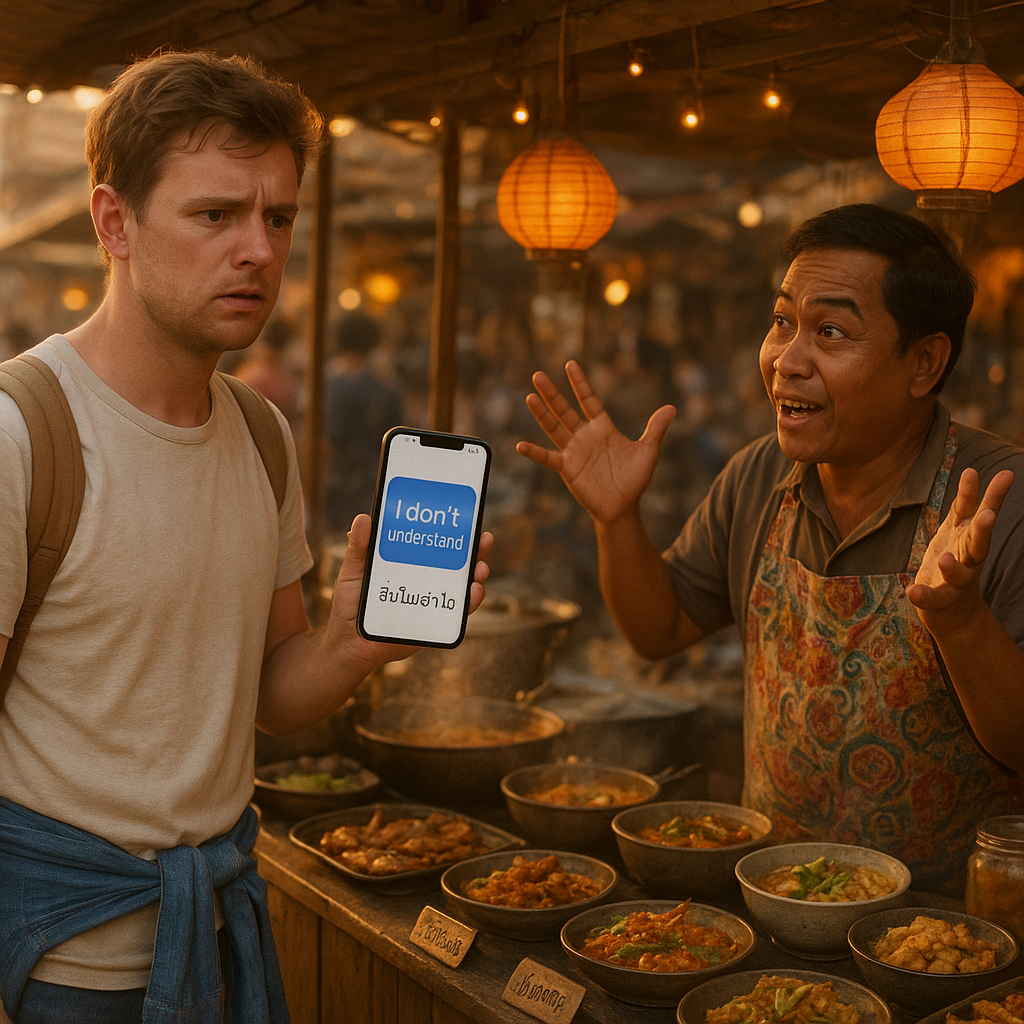
Rural travel in countries like China, Morocco, or rural Greece can mean genuine communication challenges that no amount of app preparation fully resolves. This isn’t a reason to avoid those places — it’s a reason to approach them with more patience and flexibility built into your itinerary.
Effective Strategies for Overcoming Language Barriers
There’s no single silver bullet, but a combination of approaches used thoughtfully makes an enormous difference. Here are strategies that actually hold up in the field:
- Learn the high-value phrases first. Not “where is the library?” but “please,” “thank you,” “how much?”, “I don’t understand,” and “do you speak English?” These phrases signal respect and open doors in a way that no translation app can replicate.
- Use visual communication actively. Carry a small notebook. Point at things. Sketch rough maps. Numbers are universal — show them on your phone screen rather than saying them aloud. In markets especially, this saves enormous confusion.
- Download offline translation tools before you travel. Google Translate’s offline language packs and apps like iTranslate work without data, which matters enormously when you’re in a rural area or on a tight roaming budget. The camera translation feature — where you point your phone at text and it translates in real time — is genuinely one of the most useful travel tools invented in the past decade.
- Find the local “bridge” person. In most communities, there’s someone — often younger, often working in hospitality or retail — who has enough English (or another shared language) to help translate for others. Hotel receptions, tourist information offices, and larger restaurants are good places to find these people.
- Slow down and simplify your speech. If someone has limited English, speaking louder doesn’t help (a cliché for good reason). Speaking more slowly, using shorter sentences, and avoiding idioms and slang dramatically improves comprehension.
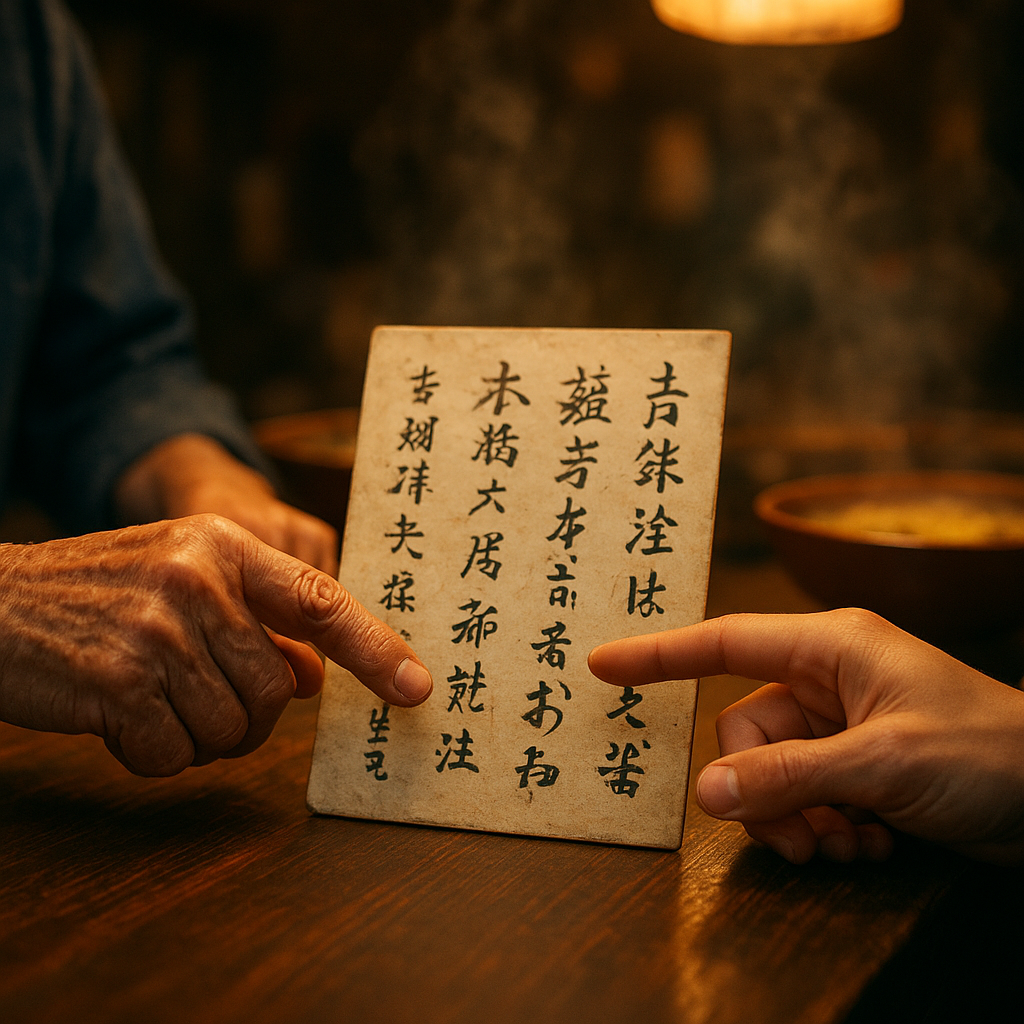
- Use translation cards for complex needs. If you have dietary restrictions, medical conditions, or accessibility needs, carry a card with the relevant information written in the local language. Several websites offer pre-made cards for common dietary needs, and Google Translate can help you create a personalised version.
A Real-World Example of a Language Barrier Situation
Consider a fairly common scenario: you’re travelling through rural Turkey and your accommodation has been mistakenly double-booked. The hotel owner speaks no English. You speak no Turkish. There’s no Wi-Fi to load Google Translate.
What works here isn’t panic or persistence — it’s patience and improvisation. You show your booking confirmation on your phone. You mime sleeping (hands pressed together against your tilted head, a gesture that’s near-universal). You point at the date. The hotel owner eventually understands the situation, makes a phone call, and finds you an alternative room two streets away. Problem solved entirely without a shared spoken language.
This kind of situation plays out constantly across the world. The travellers who handle it well stay calm, read social cues well, and treat the other person as an intelligent adult who wants to help.
How to Survive in a Foreign Country Without Knowing the Language
This is one of the most searched questions on the topic, and the honest answer is: it’s entirely doable, but it requires a shift in mindset. Here’s what matters most:
- Accept that efficiency is going to drop. Things that take two minutes at home might take twenty minutes abroad. Build this into your schedule rather than fighting it.
- Lean on visual menus and photos. In restaurants, pointing at a picture of what another diner is eating is completely socially acceptable in most cultures and often leads to excellent meals.
- Use your accommodation as a resource. Hotel and hostel staff are often the most valuable language resource you have. Before you head out each day, ask them to write down key phrases or locations in the local language. Most are happy to help.
- Embrace non-verbal connection. A genuine smile, eye contact, and relaxed body language communicate goodwill across virtually every cultural context. People respond to warmth even when words fail.
- Know your emergency vocabulary. “Help,” “police,” “hospital,” and “I need a doctor” should be memorised in the local language before you arrive anywhere, regardless of how confident you feel.
The Broader Effect of Language Barriers on Global Communication
Language barriers don’t just affect individual travellers — they shape how cultures understand and misunderstand each other on a larger scale. According to research from the European Commission, language barriers are cited as one of the top three obstacles to cross-border communication and cooperation within Europe alone. Globally, the picture is even more complex.
Misunderstandings born from language gaps can affect everything from international business negotiations to healthcare outcomes. In the United States, for example, limited English proficiency has been directly linked to poorer health outcomes for patients who can’t clearly communicate symptoms or understand medical instructions — a sobering reminder that language access is about far more than convenience.
For travellers, this broader context is worth keeping in mind. The discomfort of a language barrier is a small window into a much larger experience that millions of people live with every day — immigrants, refugees, and expats navigating systems in languages that aren’t their own. A little perspective makes the frustration easier to carry.
The Unsung Value of Trying
Here’s what nobody tells you loudly enough: making an effort with the local language — even badly, even embarrassingly — changes how people treat you. Not everywhere, not always, but often enough to matter. A fumbled bonjour in Paris, a carefully pronounced terima kasih in Indonesia, a hesitant gamsahamnida in Seoul — these small efforts signal something that transcends the words themselves. They signal respect.
You don’t need fluency. You don’t need an app. You just need the willingness to look a little foolish in service of genuine connection. That’s the real secret to navigating language barriers abroad — and it’s the one piece of advice that no translation tool can give you.
In Summary
Language barriers are one of travel’s most consistent challenges, but they’re rarely as insurmountable as they feel in the moment. Understanding what makes them harder — unfamiliar scripts, distance from tourist infrastructure, communicative fatigue — allows for smarter preparation. Using a layered approach that combines basic local phrases, offline translation tools, visual communication, and non-verbal warmth covers most situations you’re likely to encounter.
Beyond the practicalities, the language barrier is also an invitation: to slow down, to pay closer attention, and to connect with people on terms that don’t rely on eloquence. Some of the most memorable travel encounters happen precisely in the spaces where words run out.